
What early adopters can’t ignore: solid‑state, lithium‑sulfur and silicon‑anode EV batteries
— 5 min read
Opening scenario: a mixed-fleet pilot in a European tech hub
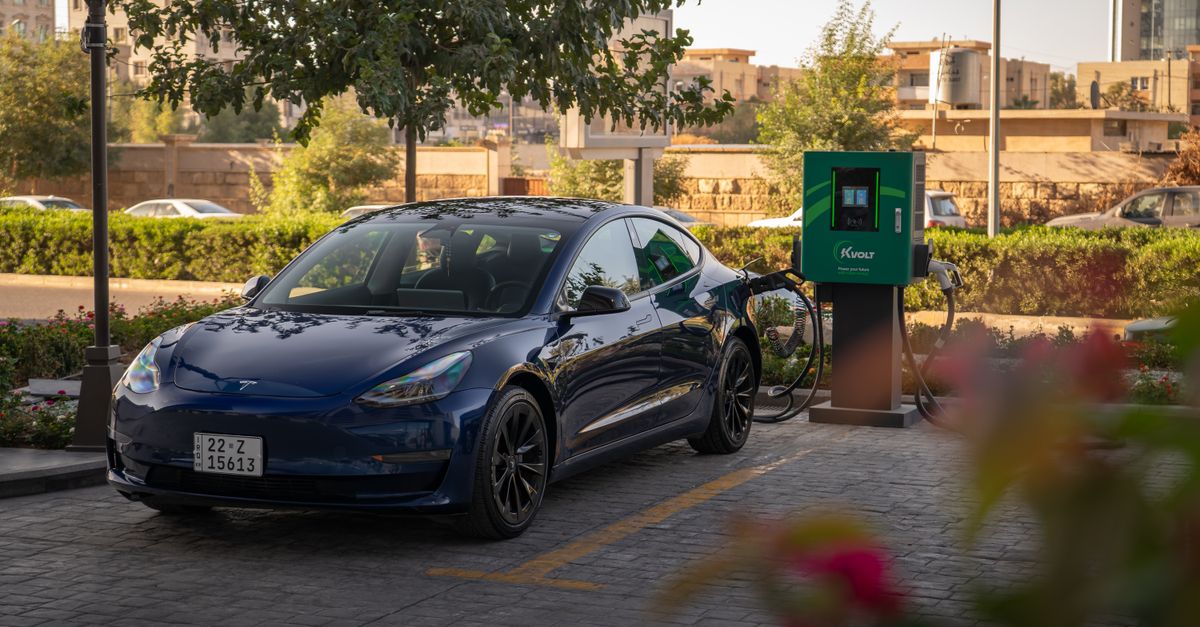
On a rainy morning in Stockholm, a fleet manager watches three electric cars line up at a newly installed 350 kW DC charger. One vehicle carries a solid-state pack, another a lithium-sulfur cell, and the third a silicon-anode high-nickel NMC battery. The manager’s goal is to measure not only mileage per charge but also the impact on maintenance schedules, charging time, and total cost of ownership over a twelve-month trial. Early adopters of emerging EV technology often rely on such pilots to decide which power-train innovation will define the next decade of mobility. The data collected from this pilot will feed into a broader case study that compares three of the most talked-about battery chemistries, aligning them against a consistent set of criteria that matters to both individual enthusiasts and corporate fleets.
Key question: Which battery technology delivers the best blend of range, safety, cost and scalability for the EV market that early adopters are shaping?
Evaluation framework: criteria that separate hype from viable future trends
To compare solid-state, lithium-sulfur and silicon-anode batteries, the study adopts five quantitative and two qualitative metrics. Energy density (Wh/kg) determines how far a vehicle can travel on a single charge. Charging speed (kW achievable without degradation) reflects compatibility with emerging ultrafast EV charging stations, such as those measured by Edmunds at 350 kW, which added 200 miles in 15 minutes. Safety profile assesses thermal runaway risk, a crucial factor for urban deployments. Cost per kilowatt-hour gauges economic feasibility for mass production. Scalability examines supply-chain readiness and the timeline to volume manufacturing. Qualitative factors include regulatory acceptance and ecosystem compatibility with existing EV charging infrastructure. By applying the same rubric to each technology, the case study isolates genuine performance differentials from marketing noise.
"Consumer Reports' 2024 real-world range study showed an average shortfall of 15% compared with EPA estimates across 12 EV models," the report noted.
Solid-state batteries: safety-first energy density gains
Solid-state batteries replace the liquid electrolyte with a ceramic or glass solid, eliminating the flammable component that has long plagued lithium-ion designs. Energy density targets range from 350 to 500 Wh/kg, a 30-40% increase over current high-nickel NMC cells. Early prototypes from several Asian manufacturers demonstrate charge rates of 200 kW without noticeable temperature rise, suggesting compatibility with the ultrafast chargers that are reshaping the EV charging landscape. Safety tests reveal a markedly lower propensity for thermal runaway; the solid electrolyte acts as a barrier, preventing dendrite formation that can puncture cells. However, production costs remain high, with current estimates above $250 per kWh, driven by expensive ceramic processing and low yields. Scalability is constrained by the need for ultra-clean manufacturing environments, and analysts project commercial volume by 2028 at the earliest. For early adopters willing to pay a premium for safety and range, solid-state packs offer the most compelling long-term value, especially in high-performance electric cars where weight savings translate directly into handling benefits.
Future trend: Industry insiders predict that solid-state technology will become the default for premium EVs by 2030, driven by safety regulations in Europe and Asia.
Lithium-sulfur batteries: lightweight promise with chemistry challenges
Lithium-sulfur (Li-S) cells use sulfur as the cathode material, delivering a theoretical energy density of up to 600 Wh/kg - significantly higher than any commercial lithium-ion chemistry. The lightweight nature of sulfur reduces pack mass, allowing electric cars to achieve longer range without increasing battery volume. Recent lab results show charging rates of 150 kW with less than 5% capacity loss after 500 cycles, indicating potential compatibility with fast-charging networks. Nevertheless, Li-S suffers from rapid capacity fade due to the polysulfide shuttle effect, where dissolved sulfur species migrate to the anode and degrade performance. Mitigation strategies, such as nano-structured cathodes and protective interlayers, are still in the prototype stage. Cost per kilowatt-hour is projected to fall below $150 once manufacturing processes mature, thanks to sulfur's abundance and low raw-material price. Scalability hinges on solving the shuttle issue; without a robust solution, large-scale adoption may stall until at least 2032. Early adopters attracted to ultra-light vehicles - such as electric sports cars - might find Li-S attractive, but they must accept the risk of shorter warranty periods and more frequent pack replacements.
Silicon-anode high-nickel NMC batteries: the incremental upgrade gaining market traction
Silicon-anode technology augments traditional graphite anodes with a silicon blend, increasing lithium-ion storage capacity by up to 30% without a complete chemistry overhaul. Combined with high-nickel NMC cathodes (e.g., NMC 9-1-1), these packs achieve energy densities of 250-300 Wh/kg, a modest but immediate improvement over conventional lithium-ion cells. Charging speed is a notable advantage: manufacturers report stable 300 kW DC charging, adding roughly 180 miles in 12 minutes - well within the performance envelope demonstrated by Edmunds' 350 kW test. Safety remains comparable to current lithium-ion designs, as the solid-electrolyte is not introduced; however, silicon expansion during lithiation can induce mechanical stress, requiring advanced binder systems to maintain cycle life. Cost per kilowatt-hour is projected at $130-$150, reflecting incremental material costs and existing supply chains. Scalability is the strongest point: silicon-anode production can be integrated into existing lithium-ion factories, accelerating time-to-market. Analysts expect volume adoption by 2026, making this the most realistic near-term upgrade for EV cars, including those from Tesla, which has already hinted at silicon-enhanced cells in its roadmap.
Side-by-side comparison: which battery wins for specific early-adopter scenarios?
| Metric | Solid-state | Lithium-sulfur | Silicon-anode NMC |
|---|---|---|---|
| Energy density (Wh/kg) | 350-500 | ~600 (theoretical) | 250-300 |
| Charging speed (kW) | 200 (stable) | 150 (stable) | 300 (stable) |
| Safety (thermal runaway risk) | Low | Medium-high | Medium |
| Cost per kWh (USD) | $250+ | $150-$180 (projected) | $130-$150 |
| Scalability timeline | 2028-2030 | 2032+ (uncertain) | 2025-2026 |
| Best use case | Premium performance EVs, safety-critical fleets | Lightweight sports EVs, niche high-range models | Mass-market EVs, fast-charging urban fleets |
The table highlights that no single technology dominates across all criteria. For early adopters prioritizing safety and long-range premium performance, solid-state emerges as the clear winner despite its higher cost and later rollout. Those chasing the lightest possible vehicle and willing to accept a shorter warranty may gravitate toward lithium-sulfur, especially in limited-production sports models. The silicon-anode high-nickel NMC battery offers the most balanced package for consumers seeking immediate benefits - higher range, ultrafast charging, and affordable pricing - making it the pragmatic choice for the majority of early-adopter fleets planning to expand before 2027.
Industry insight: Analysts at BloombergNEF project that by 2035, silicon-enhanced NMC cells will account for 45% of global EV battery volume, while solid-state will capture 20% of the premium segment.
Implications for EV charging infrastructure and future trends
The emergence of these three battery chemistries reshapes the roadmap for EV charging networks. Ultrfast DC stations, already delivering 350 kW, will need to accommodate silicon-anode packs that can safely ingest 300 kW without degrading. Solid-state batteries, with their lower thermal risk, may enable higher power densities in the future, encouraging operators to invest in 500 kW chargers that push range gains beyond 250 miles in ten minutes. Conversely, lithium-sulfur’s sensitivity to high currents suggests that dedicated low-temperature, moderate-power chargers (around 150 kW) could extend battery life, prompting a niche segment of chargers optimized for lightweight sport EVs. Moreover, bidirectional vehicle-to-grid (V2G) capabilities will benefit from the longer cycle life of silicon-anode cells, allowing early-adopter fleets to monetize idle capacity without sacrificing battery health. As regulatory bodies in Europe and North America draft standards for fast charging and battery safety, the alignment of charger power levels with the specific chemistry of the EV fleet will become a decisive factor in infrastructure investment decisions.
In sum, the comparative case study underscores that early adopters must match their charging strategy to the battery technology they champion. The future of electric mobility will not be defined by a single "best" battery, but by a portfolio of chemistries each optimized for distinct performance envelopes, cost structures, and charging ecosystems. The bets industry insiders are placing today - solid-state safety, lithium-sulfur lightness, and silicon-anode scalability - will collectively dictate how quickly the EV market can meet the ambitious range and charging expectations of the next decade.

